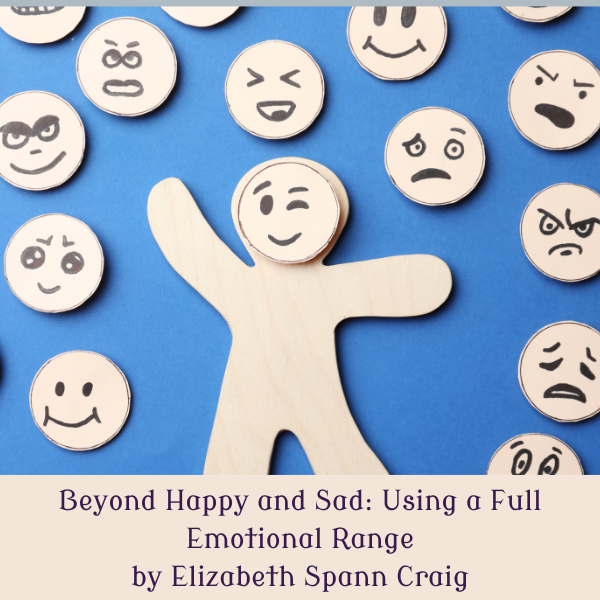
by Elizabeth S. Craig, @elizabethspanncraig.com
Most writers default to the obvious emotions—happiness, sadness, anger, fear. But readers connect more deeply with stories that explore the subtle, complex feelings that fill real life. When you tap into emotions like embarrassment, nostalgia, or quiet satisfaction, you create moments that feel genuinely human.
Include the Smaller, Everyday Emotions
Some of the most relatable moments come from minor emotional experiences that everyone recognizes. The slight irritation when someone interrupts your focused work. The awkward discomfort of running into an ex at the grocery store. The warm satisfaction of finishing a task you’ve been putting off. These smaller emotions feel authentic because readers experience them regularly. They also provide natural contrast to bigger dramatic moments, making your story’s emotional landscape feel more realistic and varied.
Explore Mixed and Contradictory Feelings
Real people rarely feel just one emotion at a time, especially during significant events. Your protagonist might feel simultaneously proud and terrified when accepting a new job. A character could experience both relief and guilt when ending a difficult relationship. Someone might feel nostalgic and annoyed while visiting their childhood home. These emotional combinations create depth and authenticity that simple, single emotions can’t match. Readers recognize the complexity because they’ve felt those contradictory pulls themselves.
Use Physical Sensations to Show Emotional Nuance
Different emotions create different physical responses, and these details help readers identify subtle feelings without explicit labeling. Embarrassment might cause heat in the cheeks and a desire to hide. Anticipation could create restless energy and difficulty sitting still. Contentment might show up as relaxed shoulders and slow, deep breathing. These physical cues let readers experience the emotion alongside your character rather than just reading about it.
Let Emotions Influence Character Actions and Decisions
Emotions should drive behavior, not just color it. A character feeling overwhelmed might make impulsive decisions they’ll later regret. Someone experiencing deep gratitude might go out of their way to help others. A person dealing with homesickness could surround themselves with familiar objects or foods. When emotions create consequences and affect plot direction, they become integral to your story rather than just atmospheric details.
Consider Cultural and Personal Context for Emotional Expression
How characters express emotions depends on their background, personality, and circumstances. Some people cry when frustrated, others get very quiet, and still others become sharply sarcastic. A character raised in a family that avoided conflict might struggle to express anger directly. Someone from a culture that values emotional restraint might show deep feelings through small gestures rather than dramatic declarations. These individual differences make emotional moments feel specific and believable.
Readers don’t just want to follow your plot—they want to feel something while they’re reading. When you give characters access to the full spectrum of human emotion, from the subtle to the intense, you create opportunities for genuine connection that keep people turning pages.
What unexpected emotion have you discovered while writing a character?
Readers connect with subtle emotions like embarrassment, nostalgia, and quiet satisfaction—the feelings that fill real life: Share on X