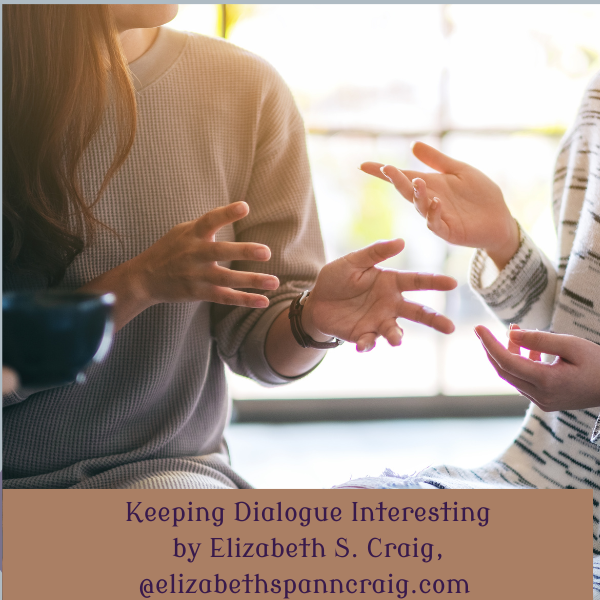
by Elizabeth S. Craig, @elizabethspanncraig.com
Good dialogue does a lot of work at once; it reveals character, moves the plot forward, and keeps readers turning pages. When conversations go flat, readers start skimming to find the action. Here’s what helps me keep dialogue earning its place in the story.
Let Characters Talk Past Each Other
Real conversations often involve people pursuing completely different agendas. One character might be asking about weekend plans while another assumes they’re being questioned about their whereabouts during a crime. These crossed wires create natural tension and show what each character cares about without spelling everything out.
Give Each Character a Distinct Voice
Characters shouldn’t all sound alike. A retired professor speaks differently than a teenage barista, and not just in vocabulary. Sentence length, formality, regional expressions, and speech patterns all play a role. I know I’ve got it right when I can identify who’s talking without needing the dialogue tags.
Use Subtext Instead of Direct Statements
Characters rarely say exactly what they mean, especially during tense moments. Someone asking “How’s your mother?” might really be saying “I know what you did.” Writing what characters don’t say directly adds layers to conversations and makes them feel more realistic.
Add Interruptions and Changes of Direction
Perfect turn-taking makes dialogue feel stilted. Real people interrupt each other, finish each other’s sentences, or change direction mid-thought when they realize they’re revealing too much. These natural speech patterns make conversations feel alive.
Mix Dialogue with Action
Characters can stir coffee, arrange flowers, or fidget while talking. These actions can contradict their words or reveal their emotional state. Someone who claims to be relaxed while shredding a napkin tells readers something their words don’t.
What helps you keep dialogue interesting?
5 techniques to make your character conversations more engaging, realistic, and purposeful: Share on X
Shredding the napkin is a really big hint! Like a character saying they are not angry while urgently sending papers through the shredder.
Good example!
These are all such good ideas, Elizabeth! Thanks for sharing them. I've always thought that the more closely the dialogue resembles actual conversation, the better. And yes, our conversations are always full of subtext and nuance, and we do talk at cross purposes. Dialogue is best if it reflects that.
Dialogue can complete so many different functions in a story.
It's important to make it natural. Most people don't speak in proper sentences for example.
So true. It makes dialogue really stiff if someone writes it with unnatural composition.
Great tips on keeping dialogue interesting. Having characters do something while talking can tell us a lot about them and break up the dialogue.
It’s very handy!
My characters often come from different walks of life and/or from different time periods, where language wasn't quite so causal (say the Victorian Age or court life), so I often try to match certain types of language traits to certain types of characters. One can do a lot of different things with words w/o necessarily attaching a particular action to what the person in question is saying.
Diction is handy, for sure! Excellent point, G.B.